
Automation is not always a good idea
Most articles urge you to automate everything. We will say something different. Not every process is worth automating, and automating a bad process is a double loss: you pay for the implementation and you are left with something that needs watching and fixing. Sometimes the best decision is not to do it at all.
The 12-month rule
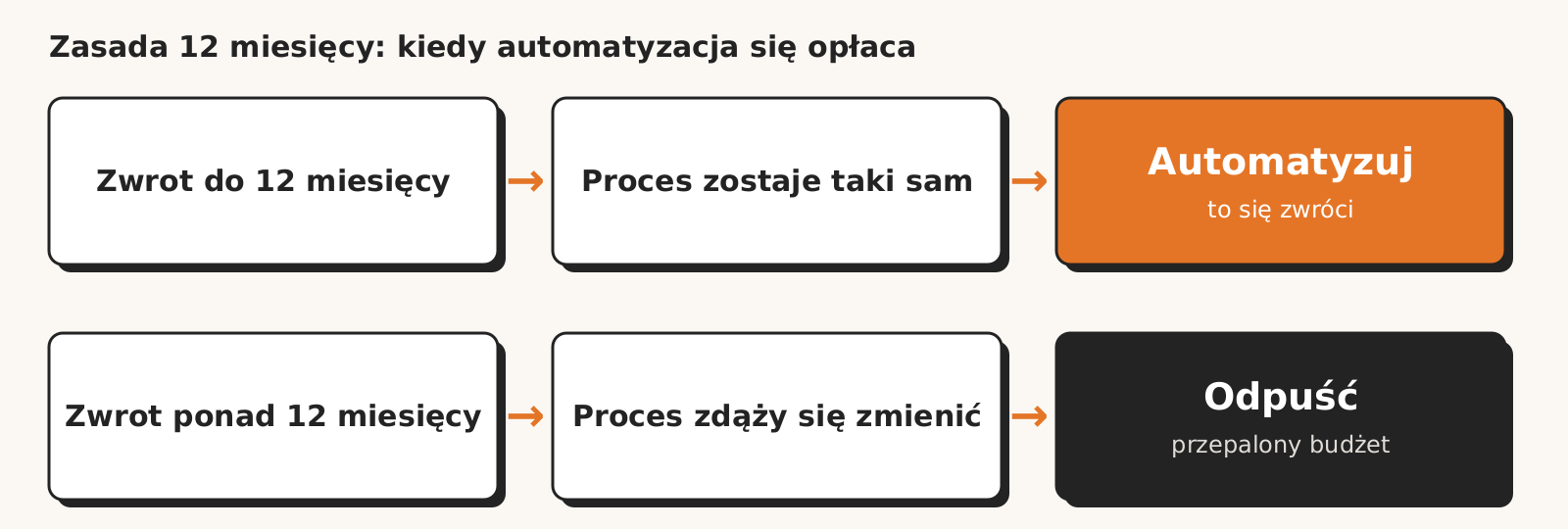
There is a simple way to quickly judge whether it is worth it. Check how many months it will take for the automation to pay for itself. If it is 12 months or less, it is usually worth it. If the return takes longer, it is most often better to let it go.
The reason is simple: the world changes fast. Suppliers, programs, prices, the way people work, everything moves. A process that looks one way today may look different in a year or disappear altogether. If the automation only pays for itself after two years, there is a good chance the process will change first. You will have paid for something that needs rebuilding before it even started to earn.
Rule: Automate what will pay for itself within 12 months. A longer return is a bet that the process will not change. And it almost always does.
Signs that it is better not to automate
- The process changes all the time. New exceptions, constant tweaks. You are automating a moving target that never stands still.
- You do it rarely. A task done once a quarter has too little time to pay back.
- The process is tiny. A few clicks every now and then. There is nothing to recover.
- You are about to change the tool or supplier anyway. You will automate something you are about to throw away.
- Nobody knows exactly how the process works. Tidy it up first, then think about automation.
When it is worth it
For balance, here are the situations where automation usually makes sense:
- The process is repetitive and stable.
- It eats up a lot of time every month.
- Mistakes really cost you: lost orders, penalties, unhappy customers.
- The return fits within 12 months.
How to check before you spend any money
No need to guess. Count how many hours a month the process takes, multiply by the cost of an hour of work and compare with the cost of implementation. If the return comes within a year or sooner, there is something to talk about. This is exactly what we do in the audit before we implement anything.
Whether your process will pay for itself within 12 months is something we work out in a free audit Business process audit.
Frequently asked questions
How do I know whether automation will pay for itself within 12 months?
Count how many hours a month the process takes, multiply by the cost of an hour of work and compare with the cost of implementation. If the annual saving covers the implementation, you are within the rule. The easiest way is to do it in a free audit.
Are small processes worth automating at all?
Only if they repeat often. Small, rare tasks usually do not pay back, because the time saved is too small.
What if the process keeps changing?
Stabilise it first. Automating a process that changes all the time is wasted budget, because the implementation needs fixing faster than it can pay back.
Is 12 months a hard limit?
It is a rule of thumb, not a law. The faster your industry changes, the shorter the acceptable return should be. In a very volatile environment it is better to aim for even 6 months.